Skip to content


Table of Contents
You start noticing more hair in your brush, or your part looks a little wider in photos than it used to. Sometimes thinning is temporary and settles on its own. Other times, follicles have been gradually weakening for a while, and it takes more than a new shampoo to support them.
At Lotus Aesthetics, we talk with patients about PRP for hair loss often. This article covers why hair follicles weaken, how the growth factors in PRP work at the follicle level, and what a realistic outcome looks like.
Can PRP Help My Thinning Crown Look Fuller?
PRP may help a thinning crown look fuller by using concentrated platelets from your own blood, applied to the scalp with microneedling, to support follicles that are still active. Some patients notice early changes in about three weeks, with the most noticeable improvement typically around three to six months, though results vary and PRP for this use is considered off-label.
Why Hair Follicles Weaken Over Time
Every hair follicle cycles through three phases: a growth phase, a short resting phase, and a shedding phase before a new hair begins. A few factors can disrupt that cycle:
- Genetics, which play a major role in pattern hair loss
- Hormonal changes that affect how follicles respond over time
- Age and stress, which can shift more follicles into the shedding phase
In pattern hair loss, follicles gradually shrink, a process called miniaturization, and spend less time in the growth phase. Each new hair grows back a little finer and thinner, which is why the change often feels slow and hard to pin down. If your hair loss is sudden, patchy, or rapid, it’s best to have a medical evaluation first, since those patterns can have other causes.
What PRP Is and Where the Growth Factors Come From
PRP stands for platelet-rich plasma, a concentration of platelets made from a small sample of your own blood. Platelets are best known for helping wounds heal, and they release growth factors, which are proteins that signal cells to repair and grow.
Because PRP is made from your own blood, it’s an autologous treatment, meaning there are no synthetic ingredients involved. That’s one reason patients looking for a growth factor treatment for hair loss in Riverdale & Ogden, UT, often ask about PRP first, especially after years of dry Utah air and strong Wasatch sun taking a toll on their scalp and hair.
How Growth Factors Support Weakened Hair Follicles
The process moves from a simple blood draw to targeted support at the follicle.
From Your Blood to Concentrated Platelets
Your provider draws a small sample of blood, similar to a routine lab test. The sample is spun in a centrifuge, which separates it into layers and concentrates the platelet-rich plasma that holds the growth factors.
Growth Factors Delivered to the Scalp
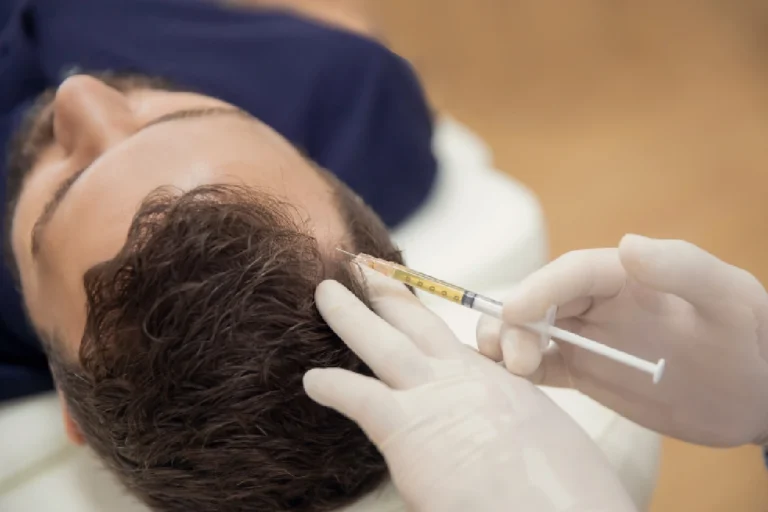
At Lotus Aesthetics, PRP for hair is paired with microneedling. Fine needles create tiny channels in the scalp, and the concentrated PRP is applied to thinning areas so the growth factors can reach the follicles. This combination makes it a form of PRP hair restoration for thinning areas that targets the scalp where support is needed most.
Support for Follicles in the Growth Phase
Once the growth factors reach the scalp, research suggests they may support blood supply and cellular activity around the follicle. This may help weakened follicles stay in the growth phase longer, which is why platelet rich plasma for hair follicle growth has drawn so much interest. Over time, some patients notice thicker-looking strands in areas that had been thinning.
What PRP Can and Can’t Do for Hair Loss
Using PRP for hair loss is considered off-label. The research is promising, but PRP isn’t a standardized or guaranteed hair loss treatment, and results vary from person to person.
PRP tends to work best where follicles are still active, such as early to moderate thinning. It doesn’t restore areas where follicles have stopped producing hair altogether. For patients interested in improving hair density naturally with their own blood, PRP can be a supportive option, but it works best as part of a realistic plan rather than a one-time fix.
What Results Look Like Over Time
Results from PRP build gradually as follicles move through their growth cycles. Here’s a typical timeline:
- Around three weeks: some patients notice early changes, such as less shedding.
- Three to six months: the most noticeable improvement typically appears.
- Six months to a year or longer: results often last this long, with maintenance treatments helping sustain them.
A series of sessions is usually recommended to build results. Outcomes depend on what’s causing the thinning, how long it’s been happening, and your individual response.
Who PRP for Hair Loss Tends to Suit
PRP for hair loss supports follicles that are still active, so results tend to be best when thinning is caught early. PRP for hair loss tends to be a good fit for adults who have:
- Early to moderate thinning, such as pattern hair loss
- Follicles that are still active in the thinning areas
- An interest in a non-surgical option that uses their own blood
Because PRP uses your own platelets, your overall health also affects candidacy, so we review your medical history first. PRP may not be right for people who:
- Have certain blood or platelet disorders
- Take blood thinners
- Have an active scalp infection
- Are undergoing certain medical treatments
For good candidates, recovery is usually easy. Side effects are mild and temporary, including scalp soreness, swelling, redness, or slight bruising that typically settles within 24 to 48 hours, and most people return to their routine soon after. If anything feels unusual, our team is here to help.
FAQs
How many PRP sessions will I need for hair loss?
Most patients need a series of sessions, followed by maintenance treatments. Your provider will recommend a plan based on your hair loss and goals.
When will I see results from PRP For Hair Loss?
Some patients notice early changes in about three weeks, with the most noticeable improvement typically around three to six months.
Does PRP for hair loss hurt?
Most patients feel mild pressure or tingling during microneedling, and any tenderness usually fades within a day or two.
Can PRP help if I’ve been losing hair for years?
Possibly, if follicles in the thinning areas are still active. Your provider can assess your scalp to see how likely PRP is to help.
Supporting Healthier-Looking Hair Starts With a Consultation
PRP delivers growth factors from your own blood to support weakened follicles, with results that build gradually and vary from person to person. Our team at Lotus Aesthetics can assess your hair loss and help you decide if PRP hair restoration fits your goals. Contact us with any questions.
Schedule your PRP Hair Restoration today. We’ll review your hair goals and help you find the right plan for supporting thinning areas.